
Injectibles
Platelet Rich Plasma and Hyaluronic Acid
Platelet rich plasma (PRP) and hyaluronic acid (HA) are our primary injectables.
What are PRP and HA?
Platelet-rich plasma (PRP) uses a concentrated portion of a person’s own blood, which contains platelets and growth factors involved in the body’s natural healing processes.
Hyaluronic acid (HA) is a naturally occurring substance found in joint fluid and connective tissue. When injected into a joint, it can help improve lubrication and cushioning.
At our clinic we offer PRP injections for patients with rotator cuff syndrome, tennis elbow, arthritis of the shoulder, arthritis of the knee, Achilles tendinitis, and plantar fasciitis.
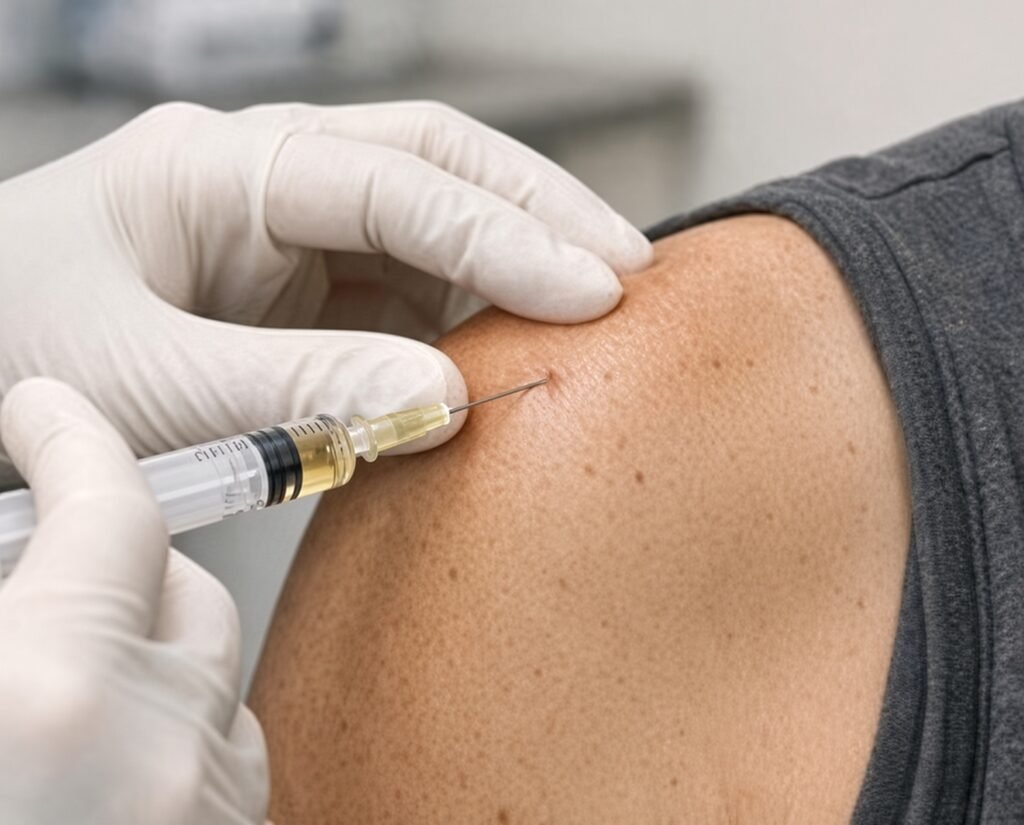
Several systematic reviews and meta-analyses have compared PRP with corticosteroid injections and with hyaluronic acid (HA), as well as the combination of PRP and HA:
- For knee osteoarthritis, multiple analyses have reported greater improvements in pain and function scores with PRP than with corticosteroid or HA injections at mid-term (around 6 months) and longer-term (around 12 months) follow-up.
Example study | Another review - For tennis elbow (lateral epicondylitis), some reviews have found corticosteroid injections associated with better early results (first 1–2 months), while PRP was associated with better pain and function outcomes at 3–6 months and beyond in several analyses.
Example meta-analysis - For plantar fasciitis, a number of reviews have reported better mid-term pain and function results with PRP compared with corticosteroid injections (often at 3–6 months).
Example review | Another meta-analysis - For rotator cuff conditions, some meta-analyses have found improvements in pain and less adverse outcomes with PRP versus corticosteroid, and benefits were more durable.
Example meta-analysis | Another review - For the combination of PRP and HA, research is strongest in knee osteoarthritis, where several analyses have reported greater improvements in pain and function compared with HA alone at mid- and longer-term follow-up. Limited data also exist for rotator cuff conditions.
Knee meta-analysis | Shoulder review
These comparisons come from published research. Individual results vary. PRP preparation methods differ between studies, and not all findings have been consistent. PRP is not FDA-approved for the treatment of these conditions.
Many orthopedic and regenerative medicine clinics routinely administer PRP and HA injections. We have been performing these injections for years and are able to offer them at significantly reduced prices when compared to other clinics due to our relatively low overhead.
For pricing, or to schedule a consultation to see if PRP and/or HA may be an option for you, please call during regular clinic hours.
